|
Yeast Storage and
Maintenance
By Chris
White
President, White Labs Inc.
Most brewery fermentations are
carried out with re-used yeast, but the questions of how to store
and maintain it frustrate even the most skilled brewers. It is
actually not as difficult as some believe, and there are techniques
that brewers can use to significantly lengthen the life span of
their yeast.
The fact that we can take a by-product of beer production –
yeast -- save it and reuse it in successive fermentations is quite
unique. We can do this because yeast is still alive and healthy
after most beer fermentations. The low alcohol levels in beer
prevent the yeast from dying off, as it does in wine production. The
problem for most brewers, then, is not whether to reuse yeast, but
how to store it and keep it healthy for future brewing sessions.
Yeast is a living organism, and is most happy and healthy when
feeding on wort sugars. When
fermentation is complete, they flocculate to the bottom of the
fermentor. They then go into a resting state. Yeast under beer is
fairly stable, and most brewers agree that the best place to store
yeast is under beer. But two crucial factors are temperature and
time.
The yeast cake at the bottom of a conical fermentor can rise in
temperature. Yeast is an excellent insulator, and heat can build up
in the middle of the slurry, 10-15 degrees F above the beer
temperature, for very flocculent strains.
When yeast heats up, its life span plummets.
If the cone is not chilled, effects are even more
significant. For
this reason, brewers try to remove yeast slurry shortly after
fermentation is complete, and the beer is chilled.
Once yeast is removed, you ideally want to use the yeast
immediately. This
allows little time for yeast to deteriorate and die. But this is not
often possible, as you may not brew another beer until the next
week. The most common way to store yeast is to put it into 5-gallon,
stainless steel soda kegs. These work well, and additionally the lid
can be modified to your desire. But the two problems with these kegs
are the many small parts and gaskets that can harbor bacteria, and
the fact that they do not vent pressure unless modified in some
fashion. Carbon dioxide can build up quickly in yeast slurry, and if
kept under pressure, will cross the cell walls and kill yeast cells.
Pressures over 35 PSI can be toxic to yeast, and soda kegs
are rated over 100 PSI. So if you use these kegs, shake and vent
pressure on a regular basis, at least once per day.
Other vessels can be used for yeast storage. Brewers
often shun plastic, because it scratches easy and scratches can
harbor bacteria and wild yeast.
But it can actually be a good choice.
Be sure to use a high grade (and food grade) plastic
(polyethylene, polypropylene), and be sure the buckets are used
exclusively for yeast storage. The advantage of plastic is the fact
that the yeast slurry is visible, so you can evaluate the condition
and quantity of yeast by sight. For example, if you pull off yeast
slurry and it is very runny, without counting under a microscope you
will be unsure of how much yeast to use in the next batch. By using
a plastic bucket to store yeast, you can see how much yeast settles
out, and pitch accordingly. Plastic buckets also need to be vented
occasionally.
How long can yeast be stored? The best case scenario is to use
the yeast within 1-3 days. Again, this is often not possible,
especially if multiple strains are being used in the brewery. The
magic number seems to be two weeks. If less than two weeks, brewers
will usually have no problem reusing yeast. Over two weeks and you
may or may not have problems. After four weeks, the viability of
yeast slurry is usually 50% or lower.
As yeast sit in storage, they consume their glycogen reserves.
Glycogen deprivation weakens their cell walls, and makes them
more susceptible to rupture. Cold temperatures retard this process,
but you want to avoid freezing yeast, as ice crystals will also
rupture cells. The ideal storage temperatures range is between 33-38oF.
When yeast rupture, they release their contents into the
liquid phase. Bacteria
can feed off the nitrogen released, and multiply rapidly.
So the yeast slurry needs to be as contamination free as
possible when stored. Cold temperatures will also help retard
bacterial growth.
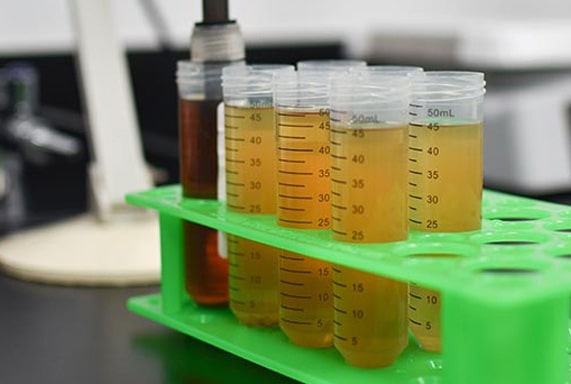
To be confident, brewers should test yeast after storage, and
before use. Check it for viability and for possible contamination.
Ideally you want to use yeast that is over 95% viable, but
most brewers just compensate for lower viability by using more
slurry. This can be
successful, but can also lead to problem fermentations.
The overall health of the yeast may be low, so the slurry may
not produce the expected range of flavor and aroma compounds, and
may not attenuate correctly. To check for viability, a brewer needs
a microscope. If you don't have one, you can add 10 ml of yeast
slurry to 1 liter of wort, and you should observe normal lag time to
onset of fermentation (5-15 hours). If it takes longer than you see
in the brewery, compensate by using more yeast (you need to this
test the day before brewing). Always
keep extra, unused yeast on hand in case a problem is encountered
with the yeast you intend to use.
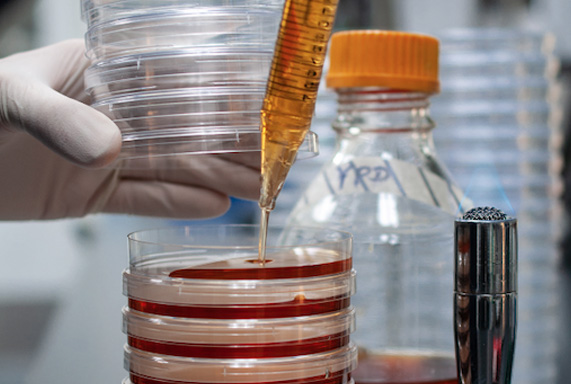
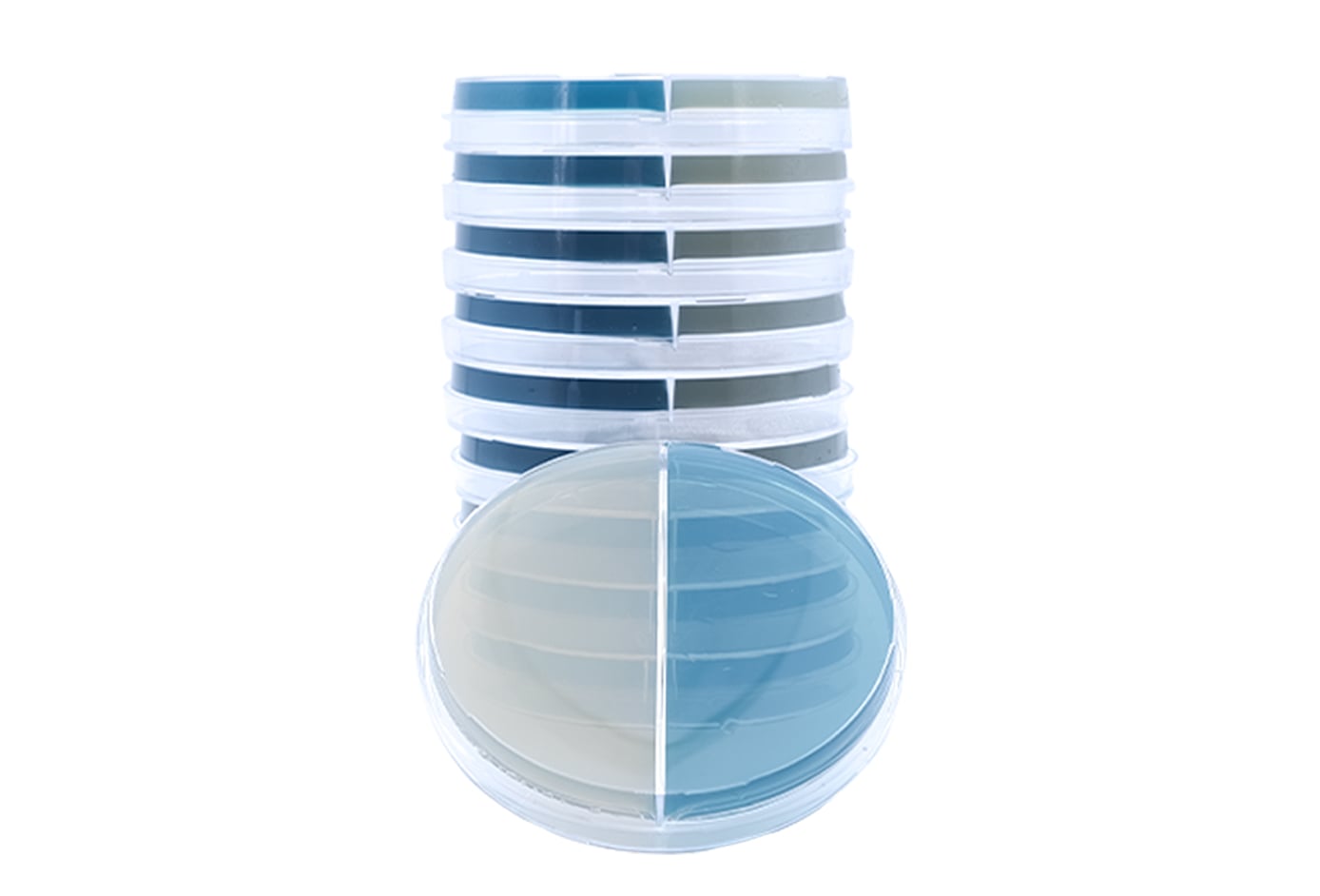
To test for contamination, the slurry needs to be plated out on
to specialized media 3-5 days before use. You should check the yeast
slurry for aerobic bacteria, anaerobic bacteria, and wild yeast. Of
the three, anaerobic bacteria is the most common bacteria found in
brewers yeast slurry, and is also the hardest for a brewer to eradicate.
The most common anaerobic bacteria are the lactic acid bacteria, Lactobacillus
and Pediococcus. A 10 ml sample of yeast slurry should be removed, diluted
1:100 with sterile water, and 0.1ml to 1.0 ml plated on suitable
media. The types and procedures for this would take up an entire
article, but if bacteria counts are over 1 per ml, and wild yeast is
over 1 per 0.1ml, the yeast slurry should not be used.
The best thing to do for yeast after it has been stored for two
weeks – if it tests clean -- is to add some fresh wort before
using. This helps to
restore yeast strength, and ensures a successful fermentation.
Simply pour off beer that has separated from flocculated
yeast, add fresh wort at 9-12 Plato, and let it sit at room
temperature for 10-20 hours. Assuming yeast activity was evident in
this "starter" or "activator", pitch into fresh
wort as usual.
Brewers have always reused yeast in brewing, long before they
knew yeast was responsible for beer production. In fact, the
continual reuse of yeast has led to the impressive genetic variety
of brewing strains, and to their suitability for brewing.
For most of history, yeast has been skimmed from the top of
fermentations, and reused. Today we usually use conical bottom
fermentors that aid in cleaning and yeast collection. While these
vessels help in yeast collection, the quality of yeast that is
collected is not as good as from top cropping.
Top cropped yeast rises at a particular time in the
fermentation, has a high viability, and is relatively free from trub.
When yeast is forced to the bottom of a conical fermentor, it mixes
with dead yeast, trub, and bacteria. This means we have to be
careful when collecting yeast, store it for short times, and test it
before reusing. With careful attention to these parameters, a brewer
should get 5 to 10 generations of high quality yeast.
For more technical
information, and to learn more about White Labs products and
services (including sample analysis, lab supplies and Siebel yeast),
contact us at 888.5.YEAST.5 or info@whitelabs.com.
|