Wine Yeast -
Home Winemakers
(A growing number of home winemakers and professionals agree that
live liquid yeast cultures impart greater flavor to wine. And to
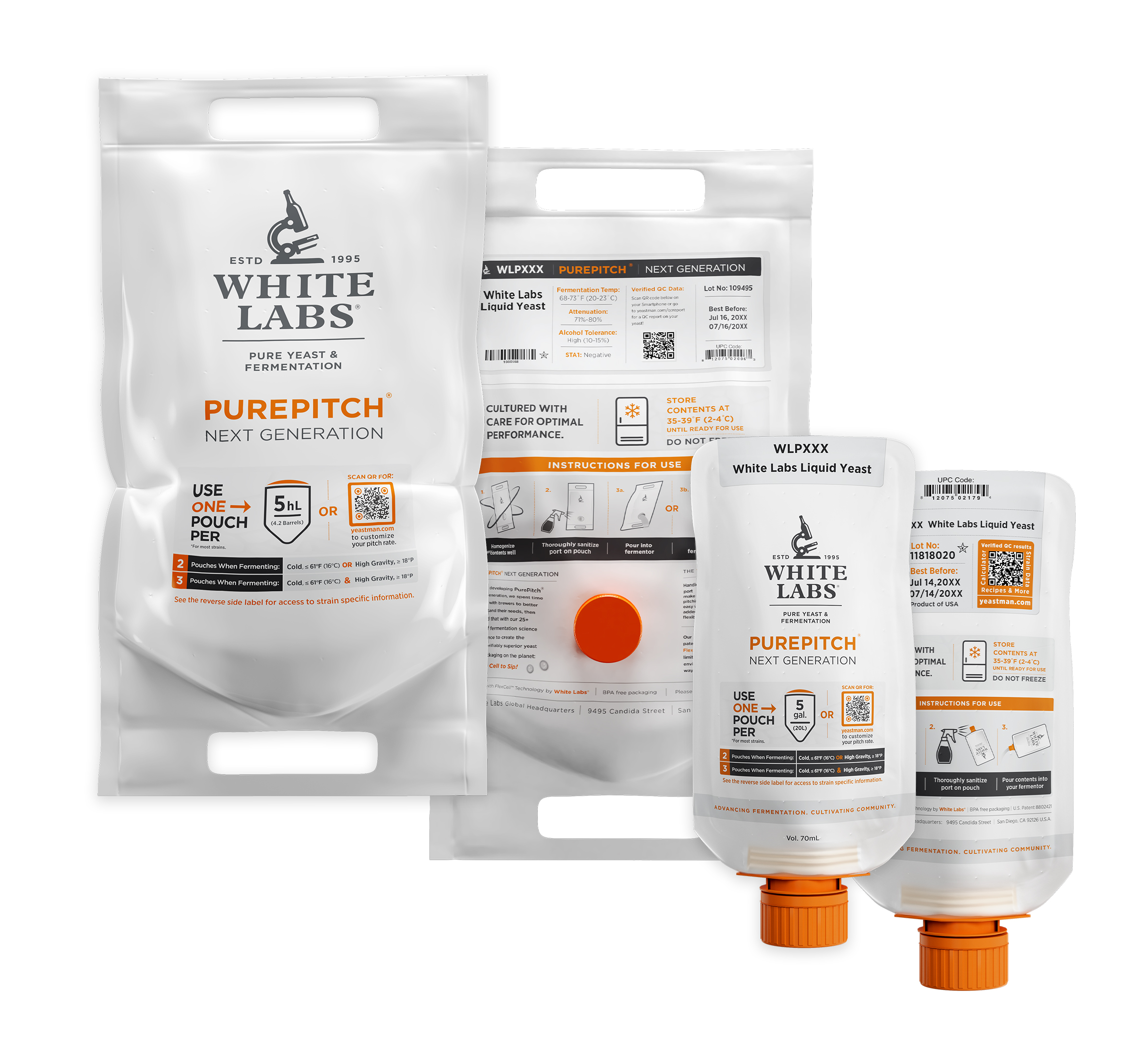
make things even easier, our liquid cultures come in vials that can
be added directly to the juice. Each vile contains sufficient living
yeast to inoculate five gallons of must without rehydration or a
starter propagation.)
WLP715 Champagne Yeast
Classic yeast used to produce champagne, cider and dry wines. This
is a clean, neutral yeast.
Alcohol Tolerance: 17%
Attenuation: >75%
Flocculation: Low
Optimum Fermentation Temperature: 70-75°F
WLP718 Avize Yeast
This yeast contributes to the complexity of white varietals,
especially in barrel fermented Chardonnay.
Alcohol Tolerance: 15%
Attenuation: >80%
Flocculation: Low
Optimum Fermentation Temperature: 60-90°F
WLP720 Sweet Mead/Wine Yeast
This yeast leaves residual sweetness in the wine. Good for blush
styles like White Zinfandel, as well as sweet ciders, Gewurztraminer
and Riesling.
Alcohol Tolerance: 15%
Attenuation: <75%
Flocculation: Low
Optimum Fermentation Temperature: 70-75°F
WLP727 Steinberg-Geisenheim Yeast
This yeast is German in origin, and produces substantial fruit and
ester characteristics. Perfect for Gewürztraminer and Riesling.
Alcohol Tolerance: 14%
Attenuation: >80%
Flocculation: Low
Optimum Fermentation Temperature: 50-90°F
WLP730 Chardonnay
Dry wine yeast. Slight ester production, low sulfur dioxide
production. Enhances varietal character. WLP730 is a good choice for all white and blush
wines, including Chablis, Chenin Blanc, Semillon, and Sauvignon
Blanc. Fermentation speed is moderate.
Alcohol Tolerance: 14%
Attenuation: > 80%
Flocculation: Low
Optimum Fermentation Temperature: 50-90°F
WLP735 French White Yeast
This classic yeast produces a creamy, rich texture in white
varietals. Gives an enhanced creamy texture.
Alcohol Tolerance: 16%
Attenuation: >80%
Flocculation: Low
Optimum Fermentation Temperature: 60-90°F
WLP740 Merlot Red Yeast
This yeast produces very active fermentations resulting in dryness.
It is neutral in flavor and perfect for Merlots, as well as Shiraz,
Pinot Noir and Cabernets.
Alcohol Tolerance: 18%
Attenuation: > 80%
Flocculation: Low
Optimum Fermentation Temperature: 60-90°F
WLP749 Assmanshausen Yeast
This yeast is German in origin and produces a spicy, fruity aroma.
Enhances the velvety texture in Pinot Noir and Zinfandel.
Alcohol Tolerance: 16%
Attenuation: >80%
Flocculation: Low
Optimum Fermentation Temperature: 50-90°F
WLP750 French Red Yeast
This classic Bordeaux yeast that results in a rich, smooth flavor
profile.
Alcohol Tolerance: 17%
Attenuation: >80%
Flocculation: Low
Optimum Fermentation Temperature: 60-90°F
WLP760 Cabernet Red Yeast
This moderate fermenting yeast results in a full-bodied flavor
profile. Ester production will complement flavor especially in
Merlot, Chianti, Chardonnay and Chenin Blanc.
Alcohol Tolerance: 16%
Attenuation: >80%
Flocculation: Low
Optimum Fermentation Temperature: 60-90°F
WLP770 Suremain Burgundy Wine Yeast
Emphasizes fruit aromas in barrel fermentations. High nutrient
requirement to avoid volatile acidity production. Alcohol Tolerance: 16%
Attenuation: >80% Flocculation: Low. Optimum fermentation
temperature: 60-90 degrees F.
Alcohol Tolerance: 16%
Attenuation: >80%
Flocculation: Low
Optimum Fermentation Temperature: 60-90°F
WLP775 English Cider Yeast
Classic cider yeast. Ferments dry, but retains flavor from apples.
Sulfur is produced during fermentation, but will disappear in first two weeks
of aging. Can also be used for wine and high gravity beers. Attenuation: >80% Flocculation: Medium. Optimum fermentation
temperature: 68-75 degrees F.
Attenuation: >80%
Flocculation: Medium
Optimum Fermentation Temperature: 68-75°F
Alcohol Tolerance: Medium-High
Malolactic Cultures:
WLP675 Malolactic Cultures
White Labs Malolactic Cultures have been gaining converts throughout
the wine world. More and more winemakers are using "malo"
to reduce the use of sulfur dioxide in the must and to make wines
with lower acidity and greater complexity. For use in up to 6
gallons. Add directly to wine after first racking.
> Click here for Malolactic
Bacteria Instructions for WLP675
|